Drive through Hillsborough on a Tuesday evening and the loudest thing you'll hear is your own tires on the pavement. No storefronts, no string lights over a patio, no sandwich board advertising a happy hour. That's not an accident of history. It's the law. Cross into Burlingame, though, and within the space of two blocks on Lorton Avenue and Burlingame Avenue, something has been happening in 2026 that changes what "going out" actually means for the people who live a five-minute drive away.
A century-old rule with a very specific effect
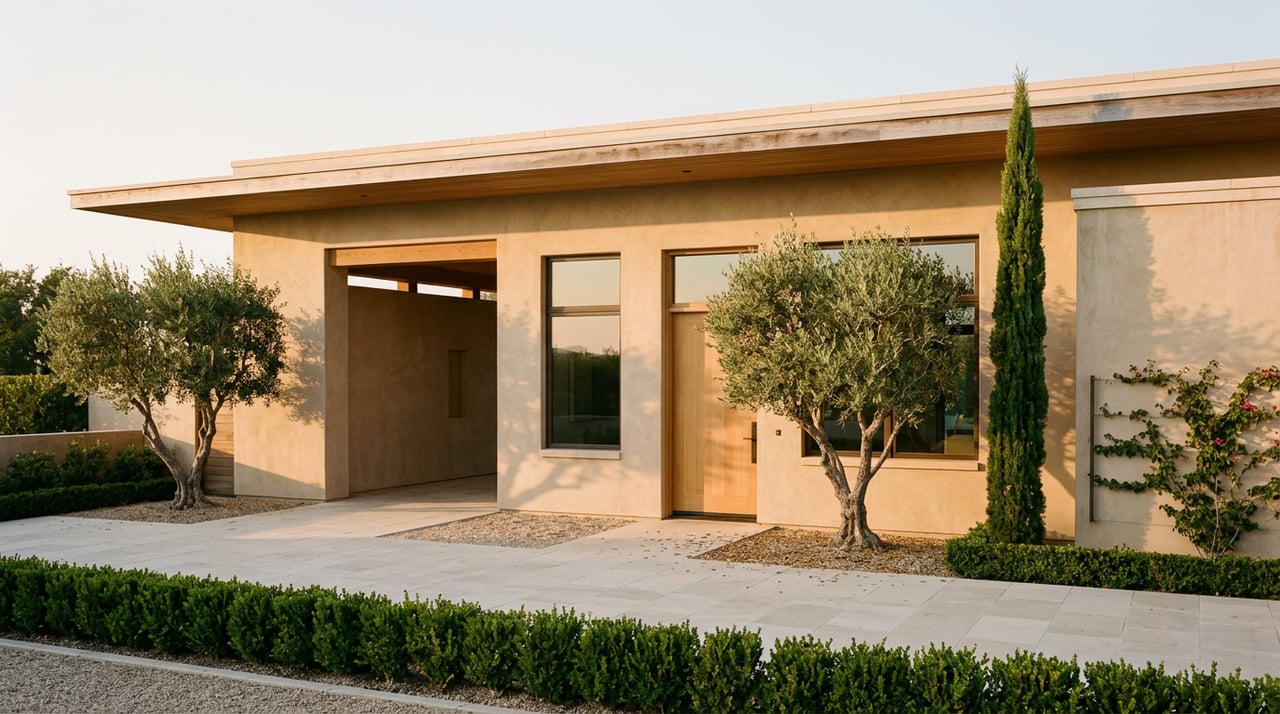
When Hillsborough's residents voted to incorporate in 1910, they wrote a zoning framework that has barely budged since. The town's municipal code designates the entire municipality for single-family residential use, with a minimum lot size of half an acre. There is no commercial zone anywhere in town. The only non-residential parcels are schools, government buildings, a golf course, a country club, and a handful of small parks. No restaurant has ever been permitted to open inside Hillsborough's borders, and under the current code, none can.
That single fact does more to shape daily life here than almost anything else about the town. It means every dinner reservation, every coffee run, every "let's just grab something quick" decision happens somewhere else. For most Hillsborough households, that somewhere else is Burlingame Avenue, a stretch of downtown less than ten minutes from most addresses in town.
For a long time, that arrangement was steady and a little sleepy: a reliable bakery, a few standby dinner spots, the kind of street where nothing changed much year to year. That is not the case anymore.
Four restaurant openings, six months, three blocks
Since February, Burlingame Avenue and the Lorton Avenue corridor just behind it have absorbed a run of restaurant openings dense enough that it would be notable in a much bigger downtown, let alone a small Peninsula street.
Amado opened quietly at 1100 Burlingame Avenue in February, then held a public ribbon cutting with the Burlingame/SFO Chamber at the end of April. The restaurant comes from chef Gloria Dominguez, whose family has run Bay Area Mexican restaurants for nearly 40 years, starting with Taqueria Salsa in 1988 and Tamarindo Antojeria in 2005. Amado is a different kind of project for her: a sit-down restaurant built around dishes that rarely show up on Bay Area menus, including a Guerrero-style mole made with white chocolate and pale chiles güeros, developed after months spent with cooks in Toluca and Puebla. This isn't a taco counter expansion. It's a family known for four decades of casual cooking making its most ambitious bet yet, and choosing Burlingame Avenue to make it.
A few blocks over on Lorton Avenue, Twelvemonth opened its doors on March 8 after a long, closely watched construction period. Owner Bob Trahan built a fully plant-based restaurant, bar, and bakehouse with a menu that changes with the seasons, four times a year, and a wine and beer list sourced exclusively from California producers. It has five private dining rooms available for events, which tells you something about who Trahan expects to be filling this space beyond a Tuesday dinner crowd.
Then there's 220 Park, a 185,000-square-foot, six-story development that's reshaping an entire block. Sweetgreen and Local Kitchens are moving into roughly 7,500 square feet of new restaurant and retail space there, at 235 and 225 Lorton Avenue respectively, giving the corridor its first real fast-casual anchor. Burlingame's mayor, Peter Stevenson, described the additions as "a great addition to the options for residents and visitors to Burlingame in terms of the restaurants," framing them as the kind of places built for frequent, everyday patronage rather than special occasions.
The tell isn't the fast-casual chains, it's who else signed the lease
Casual openings are easy to explain. Growing towns get more Sweetgreens. What's harder to explain by ordinary growth is the fourth piece of the 220 Park puzzle: Bacchus Management Group, the operator behind the Michelin-starred Village Pub in Woodside, signed a ten-year lease in 2023 to bring a fine-dining concept into the development's historic Old Post Office building. The group is explicitly aiming for a Michelin star of its own, and plans to preserve the space's original brass light fixtures, marble wainscoting, and terrazzo floors rather than gut and rebuild. The restaurant is set to open in two phases, an indoor room first and then a patio that opens onto 220 Park's new town square.
That's the detail worth sitting with. A restaurant group with a Michelin star already on its resume doesn't sign a decade-long lease on a whim, and it doesn't chase a second star in a location it considers a stepping stone. Choosing the Old Post Office in downtown Burlingame is a bet that this particular stretch of the Peninsula can support the kind of dining that used to mean a drive into San Francisco. Pair that with what Dominguez is doing at Amado, a chef known for four decades of casual, accessible cooking now building the most ambitious restaurant of her career two blocks away, and the pattern stops looking like coincidence. Two operators with real track records independently decided this was the moment and this was the street.
Smaller signs point the same direction. Trad Bone Broth, founded by brothers Jonathan and David Kim, opened its ready-to-drink broth shop downtown this year. Joe & The Juice reopened after a hiatus, drawing enough of a crowd that Downtown Burlingame's own social channels called the turnout a full circle moment for the neighborhood. None of these are headline openings on their own, but they fill in the texture around the bigger bets, the kind of steady foot traffic that makes a corridor feel alive on an ordinary Wednesday, not just during a grand opening week.
What this actually changes if you live in Hillsborough
None of this required Hillsborough's zoning to change, and it won't. That's precisely why it matters for the people who live there. The town's founders built a place with no commercial noise by design, and more than a century later that design is intact. What's changed is what sits just outside the boundary line.
A household in Hillsborough used to face a real choice most nights: something familiar and close in Burlingame, or the production of a trip into San Francisco for something that felt worth dressing up for. That choice is getting less binary. If Bacchus pulls off a Michelin-caliber restaurant inside a converted post office building a few minutes from your driveway, or if Amado's Guerrero mole ends up drawing the kind of write-ups that Dominguez's earlier restaurants never chased, the calculation for a special dinner starts looking different. So does a Tuesday night, now that Twelvemonth's seasonal menu and Sweetgreen's frequent-visit model give the corridor options for both ends of the week.
If you're weighing which of these becomes your regular spot, a few practical notes are worth knowing before you go:
- Amado, at 1100 Burlingame Avenue, is worth booking ahead now that its April ribbon cutting has put it on more radars.
- Twelvemonth's private dining rooms at 330 Lorton Avenue make it a genuine option for hosting rather than just eating out, current menu built around what's in season now.
- The Old Post Office restaurant inside 220 Park has no confirmed opening date yet, but given the ten-year lease and the Michelin ambitions attached to it, it's the one to watch over the next year.
The town itself will stay exactly as quiet as it's been since 1910. What's worth tracking is everything happening just past the town line, because for the first time in a while, that stretch of Burlingame Avenue is drawing the kind of investment that makes a five-minute drive feel like enough.
If you're curious how changes like these tend to ripple into home values and buyer interest in Hillsborough over time, that's exactly the kind of neighborhood-level detail Filipina Opena tracks closely. Let's Connect whenever you'd like to talk through what's happening in the market around you.